

The demand for faster, stronger, and more adaptable building systems has brought steel joist and frame systems for modern floor design into focus across the Australian construction industry. Whether in residential housing, commercial developments or large-scale industrial projects, steel floor systems provide structural efficiency, long spans, and quick installation.
These systems are engineered for high performance and offer flexible solutions that accommodate architectural creativity without compromising build speed or compliance.
Modern projects now benefit from integrated off-site manufactured frames, which allow for faster on-site assembly and fewer delays. This approach ensures consistency, reduces waste and creates stronger floor structures with minimal site impact.
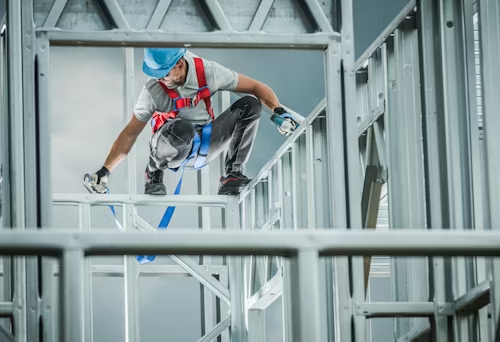
The Role of Steel Joist and Frame Systems in Floor Design
Efficient Load Distribution
Steel joist and frame systems are designed to distribute live and dead loads evenly across the floor area. This results in reduced deflection, minimal vibration, and longer spans without requiring internal support walls or beams. Joists can be designed in various profiles—including C, I or box shapes—to meet the specific performance needs of the building.
This efficient load management improves safety, comfort, and long-term durability, especially in multi-level structures where load accumulation must be carefully controlled.
Speed and Precision
With pre-cut components, labelled parts, and factory-built sub-assemblies, steel joist systems speed up the floor installation process. Accurate tolerances and computer-generated layouts eliminate the guesswork commonly associated with timber framing. The framing can be delivered in kits or panels, ensuring that installation teams stay ahead of schedule.
Builders no longer need to rely on site measuring and cutting, which reduces labour hours and avoids errors that can delay the rest of the build.
Compatibility With Other Systems
Steel floor systems integrate smoothly with walls, roof structures and services. Pre-punched holes in the joists allow plumbing, electrical and HVAC services to run through the framing, reducing the need for workarounds or slab penetrations.
This results in a clean, clutter-free underfloor space, improving service access and simplifying long-term maintenance.
Benefits of Using Steel in Modern Flooring
Long-Span Capability
Steel floor joists can achieve longer spans than conventional timber or concrete systems. This allows for open-plan layouts, fewer internal supports, and more usable floor space. In residential homes, this means wider living areas and less structural intrusion. In commercial spaces, larger uninterrupted spans support retail and office layouts.
Long-span capacity also reduces the need for load-bearing walls, giving architects more freedom in their designs.
Lightweight and Strong
Steel offers a high strength-to-weight ratio, making it ideal for projects where structural weight must be managed—such as upper-storey additions, multi-unit housing, or builds on reactive soil. Lighter floor frames reduce foundation loads and simplify engineering design.
Despite being lightweight, steel systems meet and often exceed performance standards for live load support and impact resistance.
Consistent and Straight
Unlike timber, steel does not warp, shrink or bow. Joists remain straight and level from the time they are installed, improving finish quality for flooring systems. Builders find that fewer adjustments are required when fitting subfloor sheets, tiling or installing floorboards.
This consistency also supports better alignment of walls, joinery and finishes throughout the structure.
Applications Across Residential and Commercial Projects
Detached and Multi-Dwelling Homes
Steel joist and frame systems are widely used in single and double-storey homes, as well as townhouses and duplex developments. They are particularly effective on sloping sites or where access for slab construction is limited.
Split-level and raised homes also benefit from steel floors, with adjustable piers and modular support systems allowing fast and level installation.
Apartment Buildings
In medium to high-density apartment construction, floor systems must be strong, fire-resistant and acoustically compliant. Steel floor joists are designed to support the required loads across multiple storeys and can be combined with acoustic insulation and rated flooring systems.
When installed between steel or concrete walls, they deliver consistent performance and reduce the risk of movement or cracking.
Commercial and Institutional Projects
Retail, office and educational buildings require robust and adaptable floor designs. Steel floor systems provide flexible layouts that support heavy loads such as shelving, equipment and foot traffic. Joists can also be adjusted to support plant rooms or raised data floors, which are common in commercial applications.
Pre-fabrication ensures each floor level is installed quickly and accurately, which is essential on multi-storey job sites with overlapping trades.
Off-Site Manufactured Frames for Floor Efficiency
Reduced On-Site Labour
Using off-site manufactured frames significantly cuts down on the amount of work required during framing. All components are designed, engineered and fabricated in a controlled environment, with installation instructions provided.
This reduces exposure to weather-related delays and makes it easier to maintain quality across repeated builds.
Better Scheduling
Pre-manufactured frames are delivered according to site sequencing, improving scheduling accuracy and logistics. Builders can plan crane use, crew allocation and follow-on trades more efficiently when the framing arrives ready to go.
Staged deliveries also minimise material storage on-site, keeping the workspace clear and reducing risk.
Improved Quality Control
Factory-built frames go through rigorous quality checks to ensure dimensions, connections and finishes are correct. This results in fewer errors, better fit, and stronger long-term performance. Builders can focus on speed and accuracy rather than on-site problem solving.
This method supports both compliance and customer satisfaction.
Fire, Acoustic and Energy Performance
Non-Combustible Framing
Steel is a non-combustible material, making it a strong option for meeting fire compliance requirements. Floor joists can be used in systems that achieve fire-rated separation between levels, including inter-tenancy floors in apartments.
This is especially useful in areas with high Bushfire Attack Level (BAL) ratings or in commercial buildings where fire codes are strict.
Acoustic Separation
Steel floor systems are compatible with acoustic insulation and dampening systems that reduce sound transfer between rooms or units. Joist spacing, void size and material selection can be adjusted to meet or exceed National Construction Code (NCC) requirements.
In medium-density housing, this reduces occupant complaints and improves overall comfort.
Thermal Efficiency
Steel joists integrate with underfloor insulation, reflective foil and thermal breaks. This ensures thermal performance is maintained across the floor area, supporting 6-star energy ratings and improving heating and cooling efficiency.
When combined with insulated wall and roof systems, a full steel-framed building performs well in both hot and cold climates.
Design Flexibility With Steel Floor Systems
Service Integration
Joists are pre-punched with holes to support easy service routing. Plumbers and electricians do not need to drill through joists, reducing risk and preserving structural performance. Services can be installed faster and with fewer conflicts during the fit-out stage.
Ductwork, cabling and pipework can pass through the floor structure without requiring bulkheads or drop ceilings.
Custom Profiles and Layouts
Steel floor systems can be customised for curved layouts, high-load zones or architectural features. Engineers work closely with designers to ensure that frame strength and deflection limits are maintained across non-standard designs.
This flexibility means steel joists can support staircases, cantilevers or balconies without compromising structural integrity.
Future Adaptability
Buildings using steel joists and frames can be more easily modified down the track. Whether it’s converting rooms, adding another storey or reinforcing a load zone, steel systems allow for bolt-on adjustments or modular expansion.
This is important for commercial properties or homes designed to accommodate future extensions.
Frequently Asked Questions
Are steel floor systems more expensive than timber?
While the upfront material cost may be slightly higher, steel floor systems often reduce total build cost through faster installation, fewer errors, less waste and better long-term performance. Over the life of the building, steel provides better value.
Can I use steel joists for bathrooms or wet areas?
Yes. Steel joists are suitable for all floor areas, including wet zones. They are resistant to moisture and, when installed correctly with compatible flooring systems, prevent long-term damage and rot.
Is on-site cutting required with off-site manufactured frames?
No. Off-site manufactured frames are delivered pre-cut, labelled and ready for assembly. On-site cutting is not required unless a design change occurs, which keeps the job cleaner and safer.
Conclusion
The use of steel joist and frame systems for modern floor design continues to grow as builders, designers and engineers prioritise structural integrity, speed and adaptability. Whether installed in homes, apartments, or commercial buildings, steel floor systems provide the span, strength and flexibility needed for today’s performance-driven construction methods.
By combining smart engineering with off-site manufactured frames, projects benefit from faster builds, fewer site delays and improved quality outcomes. With long-term durability, compliance with fire and acoustic regulations, and seamless service integration, steel floor systems represent a future-focused approach to structural flooring.
Builders looking to improve efficiency without sacrificing structural standards are turning to steel joist and frame systems to deliver safe, smart and consistent floors that support the demands of modern construction.