

Industrial steel products form the structural and mechanical backbone of modern economies. From heavy manufacturing plants and transport infrastructure to energy facilities and processing equipment, steel enables industries to operate safely, efficiently, and at scale.
Industrial steel is not limited to simple beams or flat sheets. It encompasses a wide range of engineered products designed to perform under demanding mechanical loads, environmental exposure, and continuous operational stress.
Understanding Industrial Steel Products requires a comprehensive examination of both the physical materials and the professional services that accompany them. Industrial steel is rarely supplied as a raw, unfinished material ready for immediate use. Instead, it is often processed, fabricated, treated, and supported through a network of technical services that ensure compliance, precision, and reliability.
To answer the central question, what are industrial steel products and services, one must explore the categories of steel products used in industrial settings and the services that transform those materials into functional systems.
Understanding Industrial Steel Products
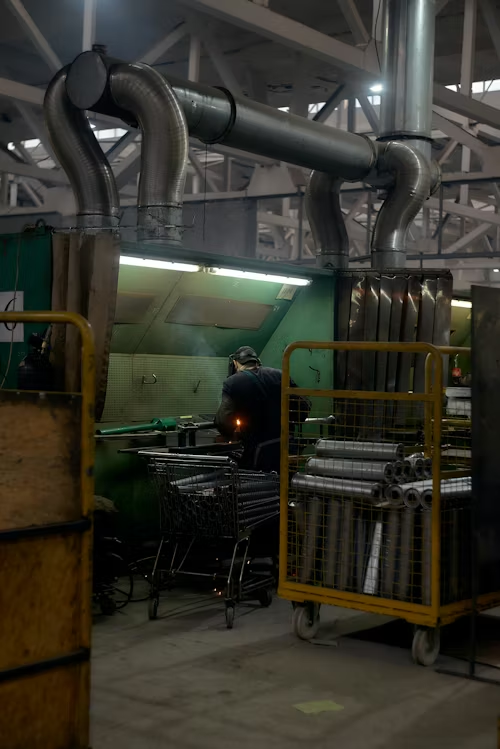
Industrial steel products refer to steel-based materials manufactured specifically for use in industrial, commercial, and infrastructure applications. These products are engineered to withstand heavy loads, repeated stress cycles, temperature variations, corrosion, and mechanical wear.
Unlike decorative or consumer-grade steel items, industrial steel products prioritise structural integrity, strength-to-weight efficiency, durability, and adaptability. They are designed according to strict standards to ensure predictable performance in demanding environments such as manufacturing plants, mining operations, oil and gas facilities, agricultural installations, and transportation systems.
Industrial steel products are typically categorised based on shape, function, and application. Each category serves a distinct purpose within industrial frameworks.
Structural Steel Sections
Structural steel sections are among the most widely used industrial steel products. These include I-beams, H-beams, channels, angles, and hollow structural sections. They provide the skeletal framework for buildings, warehouses, factories, bridges, and platforms.
I-beams and H-beams are engineered to efficiently support vertical and horizontal loads. Their flanged shape allows them to resist bending forces while minimising material weight. Channels and angles are commonly used for reinforcement, bracing, and secondary framing systems.
Hollow structural sections offer high torsional resistance and are often used in trusses, columns, and support frameworks. The uniform geometry of these sections enhances structural stability while maintaining design flexibility.
Structural steel sections are fundamental in industrial construction because they combine strength with cost efficiency and ease of fabrication.
Steel Plates and Sheets
Steel plates and sheets serve a broad range of industrial applications. Plates are thicker and often used for base plates, heavy machinery supports, pressure vessels, storage tanks, and structural reinforcements. Sheets are thinner and commonly used for cladding, enclosures, ductwork, and equipment housing.
Industrial-grade plates may be manufactured in various strengths and alloy compositions depending on load requirements and environmental conditions. Some plates are designed to resist abrasion in mining or material handling operations, while others are formulated for corrosion resistance in chemical processing facilities.
The versatility of plates and sheets allows engineers to design custom components tailored to operational needs.
Steel Pipes and Tubing
Industrial steel pipes and tubing are essential for fluid transport, structural supports, and mechanical systems. Pipes are used extensively in oil and gas pipelines, water distribution systems, fire suppression networks, and industrial processing plants.
Tubing may be used in structural frames, heat exchangers, and mechanical assemblies. Pipes and tubes are manufactured in different diameters, wall thicknesses, and grades to suit pressure and temperature requirements.
The reliability of piping systems is critical in industrial settings. Precision manufacturing and rigorous testing ensure these products perform safely under high pressure and continuous operation.
Reinforcing Steel Products
Reinforcing steel, commonly known as rebar, strengthens concrete structures by providing tensile support. Industrial construction projects often rely on reinforced concrete foundations, slabs, and retaining walls.
Rebar is designed with surface deformations that improve bonding with concrete. By combining the compressive strength of concrete with the tensile strength of steel, reinforced structures achieve greater durability and load capacity. Industrial facilities depend on reinforced foundations to support heavy machinery and equipment.
Steel Bars, Rods, and Wire Products
Steel bars and rods are widely used in machining, mechanical fabrication, and structural reinforcement. Round bars may serve as shafts or supports, while flat bars are used for brackets and mounting systems.
Steel wire products are utilised in fencing, mesh reinforcement, cable systems, and tensioning applications. The adaptability of bars and wire products makes them essential components in both structural and mechanical assemblies.
Specialty Industrial Steel Products
Certain industrial environments require specialised steel products. These may include wear-resistant plates, heat-resistant alloys, stainless steel products, or high-strength low-alloy steels. Wear-resistant steel is commonly used in mining and heavy equipment manufacturing, where abrasion is constant.
Stainless steel is preferred in the food processing and chemical industries for its corrosion resistance and hygienic properties. High-strength low-alloy steels allow for lighter structures without compromising load-bearing capacity. These specialty products expand the capabilities of industrial design.
Industrial Steel Services
Industrial steel products alone do not complete a project. Services are equally important in transforming raw materials into functional systems. Industrial steel services encompass fabrication, processing, engineering support, logistics, maintenance, and inspection. These services ensure that steel products meet precise design requirements and perform reliably in operation.
Steel Fabrication Services
Steel fabrication is the process of cutting, bending, welding, and assembling steel components into finished products or structures. Fabrication services bridge the gap between material supply and installation.
Fabricators interpret engineering drawings and produce components with accurate dimensions and tolerances. Services may include CNC cutting, plasma cutting, drilling, punching, and welding.
Custom fabrication allows industrial clients to obtain components tailored to their operational specifications. Precision in fabrication ensures compatibility with existing systems and structural frameworks.
Surface Treatment and Protective Coating Services
Industrial environments often expose steel to moisture, chemicals, heat, and abrasion. Surface treatment services enhance durability and extend service life.
Galvanising applies a zinc coating to protect against corrosion. Powder coating and industrial painting provide additional protection and aesthetic finishes. Sandblasting prepares surfaces for coatings by removing contaminants and rust.
Protective treatments are essential in outdoor, marine, and chemical processing facilities where environmental exposure is constant.
Engineering and Design Support
Many industrial steel suppliers provide engineering consultation and design assistance. These services help clients select appropriate materials, determine load requirements, and optimise structural performance.
Engineering support ensures that steel products align with safety standards and regulatory compliance. Collaboration between engineers and suppliers improves efficiency and reduces costly design errors.
Cutting and Processing Services
Suppliers often provide value-added processing services such as cutting steel to specific lengths, drilling connection holes, or bending sections to precise angles. Pre-processing reduces on-site labour and improves installation efficiency. It also minimises material waste and ensures uniformity across components.
Logistics and Supply Chain Management
Industrial steel projects often involve large volumes of material. Efficient logistics services ensure timely delivery and proper storage. Suppliers coordinate transportation, inventory management, and scheduling to align with construction timelines. Reliable logistics prevent delays and maintain productivity in industrial operations.
Inspection and Quality Assurance Services
Quality assurance is critical in industrial steel supply. Inspection services verify material composition, weld integrity, dimensional accuracy, and compliance with standards.
Non-destructive testing methods, such as ultrasonic or magnetic particle inspection, detect internal flaws without damaging components. Documentation and certification provide traceability and assurance of compliance. These services protect both operational safety and project credibility.
Applications of Industrial Steel Products and Services
Industrial steel products and services support a wide array of industries. Manufacturing facilities rely on steel frameworks, machinery supports, and conveyor systems. Energy plants use steel structures, pressure vessels, and piping networks. Mining operations depend on wear-resistant steel for equipment and structural stability.
Transportation infrastructure, such as railways, ports, and airports,s incorporates industrial steel in support structures and mechanical systems. Agricultural operations use steel silos, frames, and equipment housings. The adaptability of industrial steel ensures its relevance across sectors that demand reliability and strength.
Benefits of Industrial Steel Products
Industrial steel products offer numerous advantages. They provide high strength relative to weight, enabling efficient structural design. Steel is recyclable, supporting sustainability objectives. It is adaptable to fabrication and can be customised to complex geometries.
With proper treatment, steel resists corrosion and wear, extending service life. Consistency in manufacturing ensures predictable performance, making steel a trusted material in industrial engineering.
Frequently Asked Questions
What are industrial steel products?
Industrial steel products are steel-based materials such as structural beams, plates, pipes, reinforcing bars, and specialty alloys designed for use in construction, manufacturing, energy, mining, and other industrial applications.
What services are included in industrial steel supply?
Industrial steel services include fabrication, cutting, welding, surface treatment, engineering support, logistics coordination, and quality inspection.
Why are industrial steel services important?
Services ensure that steel products meet design specifications, comply with standards, and integrate properly into industrial systems, enhancing safety and operational efficiency.
Conclusion
Industrial steel products and services represent a comprehensive system that supports modern industry. From structural beams and plates to pipes and specialty alloys, industrial steel products provide the strength and durability required for demanding environments.
Equally important are the services that accompany these materials. Fabrication, engineering support, surface treatment, logistics, and inspection transform raw steel into reliable industrial solutions. Together, products and services form an integrated framework that enables safe construction, efficient manufacturing, and long-term operational success.
Understanding what industrial steel products and services encompass reveals the depth and complexity behind the material foundations of industry. Steel is not merely supplied; it is engineered, processed, and supported to meet the evolving needs of industrial development and infrastructure growth.